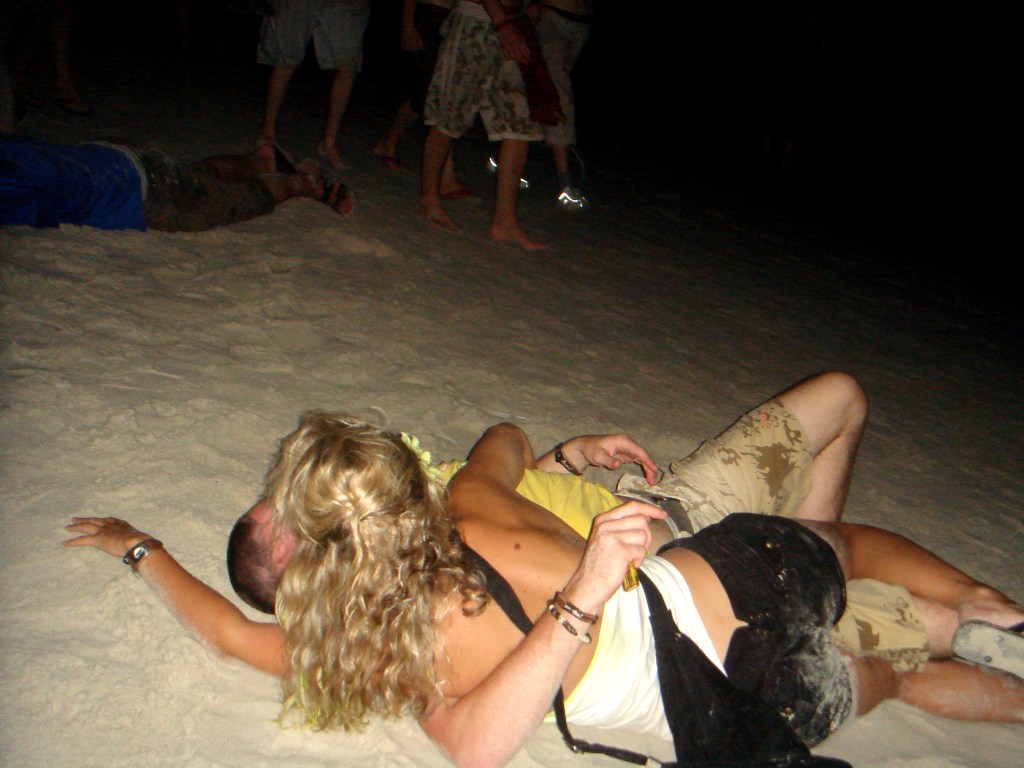
After the party! by .Live.Your.Life. (CC BY-NC 2.0)
A post someone once tagged me in caused me to lose a job. That moment changed my view of social media from one of casual fun, to career ending disaster. I realised then how important my online identity was to my future goals. I changed my privacy settings and spent many years ensuring other people didn’t take photos of me, out and about, to protect my image.
Now, my ‘crime’ was nothing illegal like Nadia Bartel’s white powder incident, and looking back it was in fact, laughable. Remember the Harlem Shake? Well, the very conservative organisation I worked for had firmly told me I was not to post photos of me drinking or dancing. A video of the Harlem Shake broke the rules, even though faces were obscured by horse heads, and no one was easily identifiable.
What followed was years of self-curation to ensure my social media online identity aligned with my professional brand. Smith and Watson in ‘Virtually Me: A Toolbox about Online Self-Presentation’, describe this as individual users adopting methods of corporate marketers ‘to project a desirable brand “Me” ’ (Smith and Watson 2014:79).
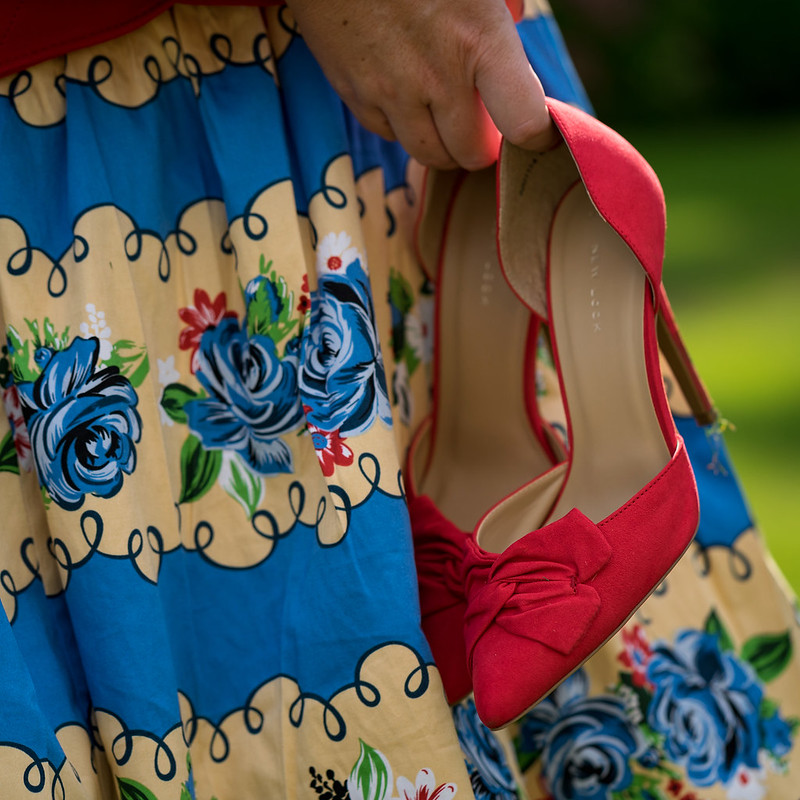
It meant I was always on guard when out in public or socialising. I always put down a wine glass or moved away from tables full of empty drinks before a photo was taken, expertly finding a neutral background quickly and discreetly. So quickly that those around me were not aware I was carefully curating content. If people looked too ‘messy’ I would offer to take the photos, so I was not linked with those ‘wasted’. I even wore my heels home from the races no matter how badly my feet hurt so I would not be photographed appearing tipsy. For many years you will not find a photo of me online that was spontaneous and relaxed.
Did this make my digital identity fake or was it just calculated authenticity? Everyone makes a decision before they post something online, so no one is genuinely authentic. The time and care taken before posting is what varies. Some people make a snap decision, whilst others will make minor edits. Others extensively edit or hire professionals to photoshop their images. I have been out with some ‘insta celebs’ paid to promote the club we were entering. This involved taking multiple photos against the branded entrance until all those in the photo were satisfied; jumping onto the photo editing app and touching up, until the photo is deemed worthy of posting. The photo was then posted as if it was a casual snap taken on the way to an awesome night out.

Having a calculated authentic profile is necessary in today’s job market. In ‘The writing on the (Facebook) wall: The use of social networking sites in hiring decisions’, Brown and Vaughn discuss that increasingly, HR professionals are using social media profiles to obtain more detailed information about candidates as a means of screening applicants suitability (Brown and Vaughn 2011:219). The argument is that researching potential employee’s digital identity helps to determine if they are the right fit culturally for an organisation.
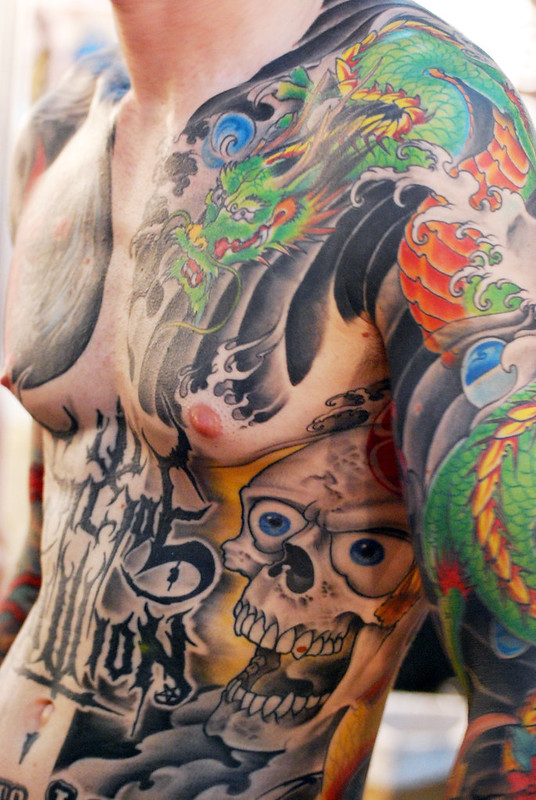
But is this just an excuse to discriminate? Having been on one side and losing a job because of social media presence, I have also been on the other side myself where I have been given a bunch of resumes and asked to see what I could find out about the candidates. In ‘Profiling: The efficacy of using social networking sited for job screening’ Evuleocha and Ugbah state ‘Employers are no longer waiting for face-to-face encounters before forming an impression about the candidates they have invited to interview’ (Evuleocha and Ugbah 2018:48). Tattoos, piercings, and outfit style can affect you getting an interview in some organisations.
The legality of the privacy of the user is simply ‘Information on the internet is publicly searchable, and in itself does not constitute an invasion of applicant privacy’ (Brown and Vaughn 2011:220). To demonstrate employers are not using digital identity for discrimination, it may be good practice for employers to document what is looked at on social media, and what decisions made were based on. However, the reality is that people use publicly available information to discriminate, and it is very difficult to prove otherwise.
This online intensity has the potential to increase opportunities as well as highlight problems. If you do miss out on an interview due to your digital identity you are not alone. I also wasn’t alone in loosing my job for doing the Harlam Shake. Fifteen WA miners were fired, as their employer considered the stunt a safety issue as well as undermining their employer’s reputation.
Underground Harlem Shake: ORIGINAL!!! by Chris Aranega
References
Brown V R, & Vaughn E D (2011) ‘The writing on the (Facebook) wall: The use of social networking sites in hiring decisions’, Journal of Business and Psychology, 26(2), 219–225. doi:10.1007/s10869-011-9221-x
Evuleocha SU & Ugbah SD (2018) ‘Profiling: The Efficacy of Using Social Networking Sites for Job Screening’, Journal of Employment Counseling, vol. 55, no. 2, pp. 48–57. doi: 10.1002/joec.12074
Otto T and Sullivan M (6 September 2021) ‘Nadia Bartel video: AFL wife, Instagram star, snorts white powder, apology (foxsports.com.au)’, Fox Footy, accessed 10 April 2022.
Smith S and Watson J (2014) ‘Virtually Me: A Toolbox about Online Self-
Presentation’, in Poletti, A and Rak, J (eds.), Identity Technologies: Constructing the Self Online, The University of Wisconsin Press, Madison, pp. 70-95.
Validakis V (4 March 2013) ‘Miners Sacked over Harlem Shake dance’ Australian Mining, accessed 10 April 2022.
 Social Media Content Creation
Leave a comment